🌍⚡
From Darkness to Powerhouse: How Nigeria’s Renewable Energy Integration, Solar Mini‑Grids & Bold Investment Are Ending the Crisis
🔥
For decades, the Nigeria power crisis has strangled businesses, darkened homes, and stalled industrial growth. But beneath the surface of blackouts and aged infrastructure, a profound shift is accelerating. The Nigeria Energy Transition Plan (ETP) has ignited a wave of renewable energy integration, solar mini-grids, and unprecedented renewable energy investment. This article dissects the key forces—from grid modernization to energy transition financing—that are reshaping Africa’s largest economy.
📜 The Nigeria Energy Transition Plan: A National Blueprint
Unveiled in 2022, the Nigeria Energy Transition Plan sets an ambitious course: universal energy access by 2030 and net‑zero emissions by 2060. It balances gas as a transition fuel with an aggressive scale‑up of renewables, aiming for 30 GW of installed capacity within this decade. The plan’s success hinges on robust energy transition financing, modernised grids, and the rapid deployment of decentralized energy systems.
🔆 Renewable Energy Integration: Powering the Grid with Sun & Wind
Renewable energy integration is no longer a pilot project—it’s a national imperative. Nigeria is weaving solar PV, small hydropower, and wind into the national grid while managing intermittency through advanced forecasting and storage. The Transmission Company of Nigeria has begun retrofitting substations with smart inverters and control systems to handle bidirectional flows from distributed generation. According to industry experts, renewable energy integration will cut carbon emissions by 35 % by 2030 while reducing dependence on expensive diesel generators.
☀️🏘️ Solar Mini-Grids: Lighting Up Rural Nigeria
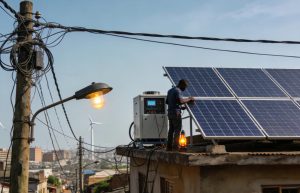
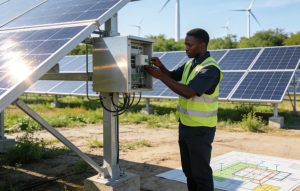
Off‑grid communities are leaping straight to clean power through solar mini-grids. With over 150 mini‑grids already operational (and a target of 10,000 by 2030), the Rural Electrification Agency is proving that decentralized energy can deliver reliable, affordable electricity faster than centralised extensions. Each mini‑grid powers hundreds of homes, clinics, and small agro‑processing units—creating local jobs and enabling digital connectivity.
- Solar mini-grids now provide 24/7 renewable power to more than 500,000 people.
- They enable renewable energy integration at the community level, reducing transmission losses.
- Private operators use mobile payments, making energy accessible even in remote areas.
💰📈 Renewable Energy Investment – Capital Floodgates Open
Global and local investors are pouring money into Nigeria’s clean energy space. Renewable energy investment reached $650 million in 2025 alone, driven by green bonds, climate funds, and private equity. The country issued Africa’s first sovereign green bond in 2017, and since then, energy transition financing instruments have multiplied. Development finance institutions like the African Development Bank are backing large‑scale solar parks and mini‑grid portfolios, de‑risking projects for commercial capital.
🔋🏭 Grid Modernization and Grid‑Scale Battery Storage
A 21st‑century grid is essential to absorb variable renewables. The grid modernization programme includes installing smart meters, automated distribution management systems, and high‑voltage backbones like the AKK gas pipeline (which also supports future hydrogen blending). Simultaneously, grid‑scale battery storage is emerging: the first 10 MW/20 MWh lithium‑ion battery in Kaduna stabilises frequency and stores daytime solar for evening peaks. Such storage assets are critical for both reliability and renewable energy integration.
🏗️🌱 Energy Transition Financing Meets Local Manufacturing Africa
Energy transition financing isn’t just about building power plants—it’s about creating local value chains. Nigeria is fostering local manufacturing Africa initiatives to assemble solar panels, inverters, and lithium batteries domestically. Startups like Auxano Solar now produce panels in Lagos, while government incentives encourage local manufacturing renewable components. This reduces import dependency, creates jobs, and retains capital within the continent.
- Local manufacturing Africa can cut solar project costs by up to 30 %.
- Renewable energy investment is increasingly channelled into local factories and assembly lines.
⛽🔧 Gas-to-Power Transition and Energy Transition Plan Infrastructure
While renewables soar, natural gas acts as a bridge. The gas-to-power transition involves expanding pipeline networks (like the AKK line) and modernising thermal plants to run on gas with lower emissions. This dual approach ensures baseload stability while storage capacity scales up. The Energy Transition Plan infrastructure also includes EV charging corridors and green hydrogen pilots, positioning Nigeria for a multi‑vector energy future.
📅🎪 Nigeria Energy Expo 2026 & NNEPIE 2026 – Where Deals Happen
The Nigeria Energy Expo 2026, co‑located with NNEPIE 2026 (Nigeria National Energy Petroleum Investment Expo), will gather global stakeholders in Lagos. Organised by the exhibition industry leaders, the event showcases breakthroughs in grid‑scale battery storage, solar mini‑grids, and energy transition financing. It’s the premier marketplace for partnerships that turn the Nigeria Energy Transition Plan into tangible projects.
📡🔌 Industry Updates and Emerging Product Categories
Recent Industry Updates highlight a surge in innovative Product Categories: pay‑as‑you‑go solar home systems, solar‑powered cold storage for farmers, and modular mini‑grids that scale with village demand. These solutions are bridging the energy gap while building a resilient ecosystem of manufacturers, distributors, and financiers.
🔭🌅 The Road Ahead: A Renewable‑Powered Nigeria
The pieces are in place: a bold Nigeria Energy Transition Plan, surging renewable energy investment, pioneering solar mini-grids, and modernised grids. Challenges remain—currency volatility, infrastructure gaps—but the trajectory is unmistakable. As the Nigeria Energy Expo 2026 approaches, the world is watching a nation determined to turn its power crisis into a clean‑energy success story. With continued commitment to renewable energy integration and grid modernization, Nigeria is not just illuminating homes—it’s powering an economic renaissance.