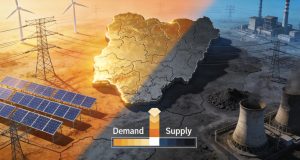
For decades, Nigeria has occupied a paradoxical position in the global energy narrative. It is Africa’s largest economy, the continent’s most populous nation, and a top-tier producer of crude oil and natural gas. Yet, it remains home to one of the world’s most persistent and economically crippling Nigeria power crisis. The statistics are stark: approximately 85 million Nigerians lack access to grid electricity, while those connected endure an unstable supply characterized by frequent grid collapses. For an economy striving to become a $1 trillion powerhouse, the gap between energy demand and supply represents not just a technical failure, but a monumental investment frontier.
For global investors, this dysfunction is not merely a risk to be managed; it is a market signal. The nation’s power sector is undergoing a forced, yet necessary, evolution. From sweeping power sector reform initiatives to the explosive growth of decentralized renewable energy, Nigeria is pivoting from a centralized, state-dominated utility model to a diversified, privately-led ecosystem. This article explores the anatomy of the crisis, the reforms reshaping the landscape, and the high-yield energy investment opportunities awaiting those willing to navigate this complex but promising market.
The Current State of the Nigeria Power Crisis: Causes and Consequences
To understand the investment thesis, one must first grasp the scale of the problem. Despite possessing an installed capacity exceeding 13,000 megawatts (MW), Nigeria frequently struggles to dispatch as little as 4,000 MW to the grid. This operational capacity is woefully inadequate for a nation of over 220 million people, resulting in an estimated annual economic loss of $26 billion to $29 billion, according to the International Monetary Fund (IMF).
The Structural Bottlenecks
The Nigeria energy sector suffers from a trilogy of systemic issues:
-
Gas Supply Constraints: While Nigeria is a gas-rich nation, the domestic gas value chain is broken. Insufficient pipeline infrastructure, vandalism, and a lack of commercial discipline mean that gas-fired power plants, which account for over 80% of grid power, often operate below capacity due to a lack of feedstock.
-
Weak Transmission Infrastructure: The Transmission Company of Nigeria (TCN) operates a grid that is both under-capacity and antiquated. It functions as a “wheel of fortune” rather than a reliable conduit; a minor disturbance in one region often triggers a nationwide system collapse.
-
Liquidity and Tariff Deficit: Perhaps the most insidious issue is the liquidity trap. Distribution Companies (DisCos) are unable to collect revenues sufficient to pay Generating Companies (GenCos) and gas suppliers due to a combination of metering gaps, political interference in tariff setting, and low collection rates.
The consequences ripple through every sector. High operating costs force manufacturers to rely on expensive diesel generators, increasing the cost of goods by an estimated 40% and eroding the competitiveness of Nigerian exports.
The Privatization Legacy and Policy Reforms
In 2013, Nigeria embarked on one of the most ambitious infrastructure privatizations in history, selling off the state-owned Power Holding Company of Nigeria (PHCN) into successor GenCos and DisCos. The goal was to inject private capital and operational efficiency. While the privatization of Nigerian power sector ended the era of outright state monopoly, it did not immediately solve the crisis. Investors in the initial wave found themselves battling regulatory uncertainty and the aforementioned liquidity trap.
The Electricity Act 2023: A Game Changer
The landmark Electricity Act of 2023 replaced the outdated 2005 Electric Power Sector Reform Act (EPSRA) and represents a paradigm shift. For global investors, this legislation is critical because it:
-
De-monopolizes the grid: States can now generate, transmit, and distribute power independently of the federal grid. This allows sub-national governments to develop their own captive power markets.
-
Enables vertical integration: It removes barriers for private players to operate integrated utilities (generation, transmission, and distribution) within designated economic zones or states.
-
Mandates transition to cost-reflective tariffs: While politically sensitive, the act provides a legal framework to phase out subsidies that have historically choked the sector’s cash flow.
This reform has created a more predictable environment. The Nigerian Electricity Regulatory Commission (NERC) is now transitioning into a role that emphasizes market competition rather than direct control, signaling to investors that the era of opaque, discretionary regulation is fading.
[Understanding the Nigerian Electricity Regulatory Commission (NERC)]
Renewable Energy: The Frontier for Global Investors
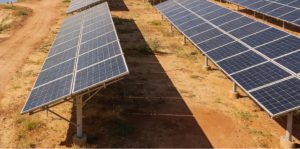
Nigeria’s energy transition plan aims for net-zero emissions by 2060, but the immediate driver for renewable energy investments in Nigeria is not just climate ambition—it is economics. The country is blessed with some of the highest solar irradiation levels in the world, averaging 5.5 kWh/m²/day.
The Solar Imperative
The potential is staggering. Experts estimate Nigeria has a theoretical solar capacity of over 200 GW, dwarfing the current grid capacity. However, the market opportunity lies in bridging the gap between this potential and the current reality.
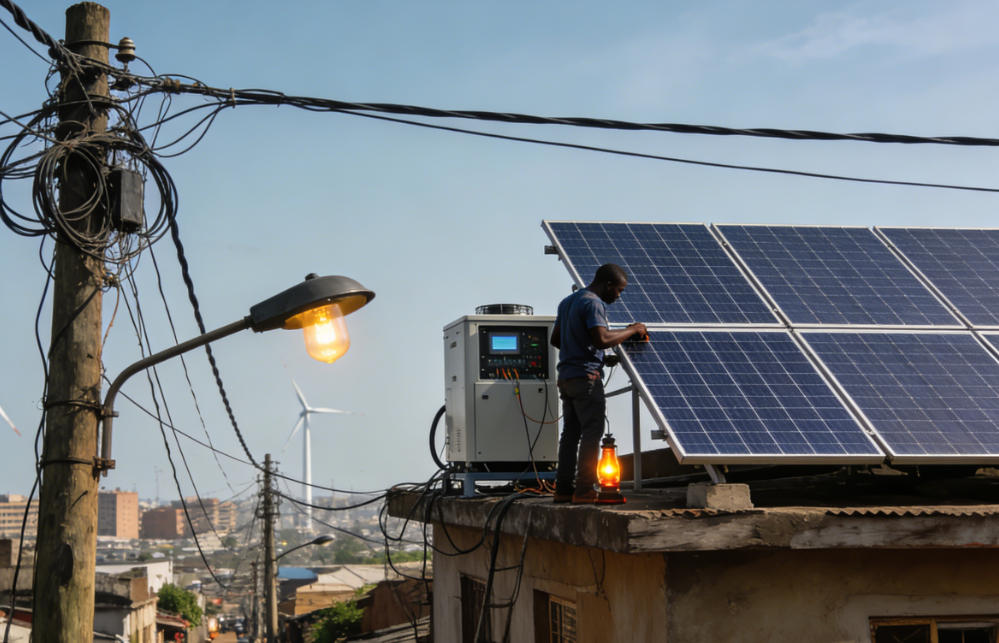
We are witnessing a shift from large-scale, capital-intensive solar farms (which still face grid evacuation challenges) to hybrid and commercial & industrial (C&I) solutions. Multinational corporations operating in Nigeria, facing unreliable grid supply, are increasingly turning to private solar hybrids to secure their operations. This “behind-the-meter” market is booming. For instance, private power providers are developing solar parks in free trade zones, offering reliable power at tariffs competitive with diesel.
Hydro and Emerging Technologies
Beyond solar, there is a resurgence of interest in hydropower. The 3,050 MW Mambilla Hydro project remains a long-term play, but smaller run-of-river hydro projects present viable opportunities for investors looking to feed into the grid under the new feed-in tariff framework. Additionally, as gas flaring regulations tighten, there is a growing niche for gas-to-power projects that utilize stranded associated gas, offering a cleaner bridge fuel alternative to diesel.
Off-Grid and Distributed Energy Solutions
While the national grid is the traditional focus, the real innovation—and the most immediate returns—are occurring off the grid. The off-grid solar market Nigeria is currently one of the fastest-growing decentralized energy markets in the world.
The Mini-Grid Revolution
Given the prohibitive cost of extending the national grid to rural and peri-urban areas, mini-grids have emerged as the preferred electrification model. These are isolated distribution networks powered by solar PV, batteries, and diesel backup, serving communities of up to several thousand people.
The Rural Electrification Agency (REA) has been instrumental here, leveraging the World Bank-backed Nigeria Electrification Project (NEP) to de-risk investments. Through results-based financing, developers receive capital grants to cover a portion of their capital expenditure, making the unit economics viable for investors.
The Pay-Go Solar Market
For individual households and small businesses, Pay-Go (Pay-As-You-Go) solar home systems are democratizing energy access. Companies are leveraging mobile money platforms to allow customers to pay for solar systems in installments. This market has seen explosive growth, with over 2 million units already deployed. For global investors, this represents a high-growth consumer finance market disguised as an energy play.
Key trends in this space include:
-
Productive Use Appliances: Moving beyond lighting and phone charging to powering cold storage, irrigation pumps, and commercial equipment, which increases the ability to pay.
-
Embedded Generation: DisCos are beginning to adopt “ring-fencing” strategies, allowing private developers to build and operate distributed generation within their franchise areas, selling power directly to end-users through a wheeling mechanism.
Navigating Risks: Regulatory Frameworks and Incentives
No discussion of the Nigeria energy sector is complete without addressing the inherent risks. However, the sophistication of risk mitigation mechanisms has matured significantly, making the market more accessible to institutional capital.
Currency and Liquidity Risks
The primary concern for foreign investors remains currency convertibility and the liquidity of the Nigerian Naira. However, the sector now benefits from multi-lateral interventions. The Central Bank of Nigeria (CBN) has introduced the Nigerian Electricity Market Stabilization Facility (NEMSF), a multi-billion-dollar intervention fund designed to clear legacy debts and provide liquidity to the value chain. Furthermore, many bilateral power purchase agreements (PPAs) for C&I and embedded generation are now structured in US dollars or indexed to the dollar, mitigating currency devaluation risk.
Risk Mitigation Instruments
Development finance institutions (DFIs) such as the International Finance Corporation (IFC), the African Development Bank (AfDB), and the U.S. Development Finance Corporation (DFC) are highly active in Nigeria. They provide:
-
Political Risk Insurance (PRI): Covering expropriation, breach of contract, and inconvertibility.
-
Partial Risk Guarantees (PRGs): Ensuring that off-takers (DisCos or government agencies) honor their payment obligations.
-
Technical Assistance Grants: Supporting developers in feasibility studies and environmental impact assessments.
Fiscal Incentives
The government has introduced the VAT Modification Order and the Finance Act, which zero-rate VAT on imported renewable energy equipment (such as solar panels, inverters, and lithium batteries) and reduce import duties. This reduces the initial capital outlay for developers by approximately 15–20%, improving project internal rates of return (IRR).
[Guide to Foreign Direct Investment (FDI) in Nigeria]
Data & Insights: The Funding Gap and Market Potential
The scale of capital required to resolve the Nigeria power crisis is immense. According to the Federal Ministry of Power, achieving the government’s target of 30 GW of installed capacity by 2030 requires an estimated $10–15 billion annually in investment. Currently, the sector attracts less than $3 billion per year, leaving a significant funding gap that private capital must fill.
High-Yield Opportunities
-
Metering: There is a current metering gap of over 7 million customers. The National Mass Metering Programme (NMMP) has created a massive procurement opportunity for meter manufacturers and asset financing companies.
-
C&I Solar: The C&I market alone is projected to be worth over $2.2 billion by 2025, as businesses seek to reduce diesel consumption.
-
Grid Optimization: Smart grid technologies, battery storage systems, and grid management software represent a nascent but high-demand market as TCN seeks to modernize its operations.
For global investors, the entry point is no longer limited to building mega power plants. The unbundling of the sector means opportunities exist across the value chain: from upstream gas infrastructure and midstream transmission towers, to downstream metering and retail energy services.
Conclusion: The First-Mover Advantage
The narrative of Nigeria as a high-risk energy market is shifting. While the challenges of the Nigeria power crisis are real—spanning infrastructure deficits, regulatory legacy issues, and macroeconomic volatility—the underlying fundamentals are compelling. Nigeria offers a demographic dividend (a young, urbanizing population), a massive energy deficit (creating a captive market), and a government that has demonstrated a willingness to reform (evidenced by the 2023 Electricity Act).
For investors, the strategy is not to wait for the perfect macroeconomic environment but to partner with the right local entities, leverage the robust DFI risk mitigation tools available, and focus on the high-growth segments of the market: renewables, C&I power, and off-grid solutions.
The world is watching as Africa’s giant attempts to flip the switch. Those who enter the market now, armed with capital, patience, and a strategic understanding of the new regulatory landscape, stand to define the future of Nigeria’s energy sector. The crisis is profound, but for the astute investor, the opportunity to power a nation—and earn substantial returns—has never been clearer.