For decades, Nigeria’s energy sector was a paradox: a giant with limitless potential, perpetually hamstrung by policy inconsistency, infrastructural decay, and the crippling irony of being a crude oil exporter reliant on imported refined products. Yet, as we navigate 2026, the narrative has undergone a seismic shift. Following a decade of structural reforms and landmark infrastructure commissioning, Nigeria has solidified its position as Africa’s most lucrative energy market. The convergence of fiscal stability under the Petroleum Industry Act (PIA), the operational reality of the Dangote Refinery, and a booming decentralized renewable energy sector has created a unique investment ecosystem where margins are high, demand is insatiable, and the risk-reward ratio is finally tilting in favor of the bold investor.
1. The New Center of Gravity: A 2026 Overview
Entering 2026, the Nigerian energy landscape is defined by a single unifying factor: certainty. While global markets grapple with supply chain volatility, Nigeria has emerged as a beacon of predictable deregulation. According to the Nigerian Upstream Petroleum Regulatory Commission (NUPRC), average daily crude production (including condensates) has stabilized at 1.8 million barrels per day, supported by enhanced security frameworks in the Niger Delta.
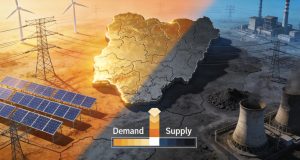
More importantly, the macroeconomic indicators that once deterred foreign direct investment (FDI) are stabilizing. The removal of the petrol subsidy—a political third rail for decades—has been fully absorbed by the market, allowing private capital to flow into downstream logistics without the distortion of state-controlled pricing. For investors asking, “Why invest in Nigerian energy sector now,” the answer lies in the numbers: the country’s 200+ million population represents the largest untapped energy demand curve in Africa, and for the first time in a generation, the fiscal rules are fixed.
2. The Post-Dangote Refinery Era: Reshaping Regional Trade
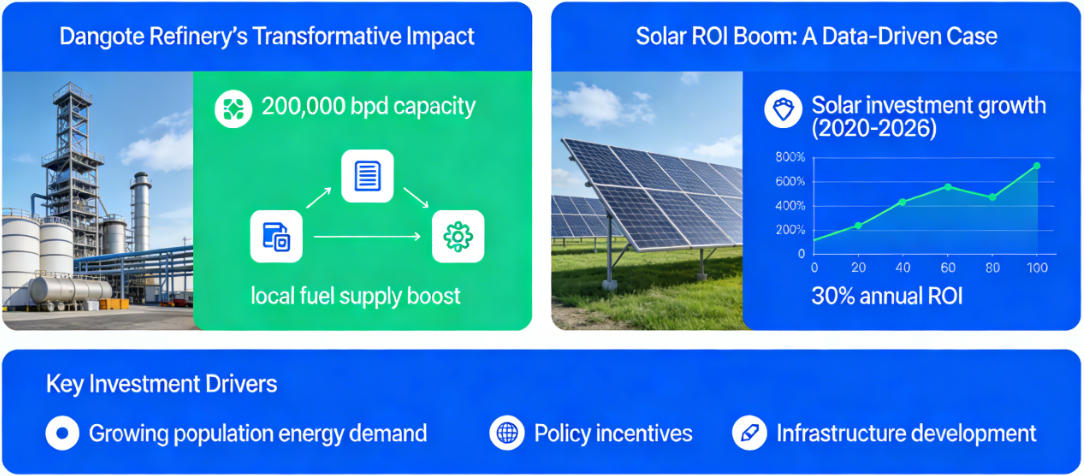
The single most transformative event of 2026 is the full operationalization of the Dangote Refinery. At 650,000 barrels per day (bpd), this mega-complex has fundamentally dismantled the “import dependency” narrative that has haunted Nigeria for 30 years. By the first quarter of 2026, the refinery achieved steady-state operations, producing not just Premium Motor Spirit (PMS), but also diesel, aviation fuel, and polypropylene.
Impact on Nigerian Energy Prices and Regional Trade
The impact of Dangote Refinery on Nigerian energy prices has been profound. With domestic refining capacity finally matching local consumption, the era of importing off-spec products from Europe at volatile international prices is over. This has led to a stabilization of the Naira, as the demand for US dollars to pay for fuel imports has plummeted by over 90%.
Furthermore, Nigeria is now a net exporter of refined products to the West African sub-region. This has shifted the dynamics of the African energy market outlook, positioning Nigeria as the industrial hub of the continent. For investors, the downstream sector—once considered too risky due to price controls—is now a lucrative, deregulated market where margins are dictated by efficiency and logistics rather than government fiat.
3. Gas Monetization: The Maturing of the “Decade of Gas”
If oil is the past, gas is the present and future of Nigeria’s energy dominance. The “Decade of Gas” policy, initiated in 2020, has reached its maturation point in 2026. The completion of Nigeria LNG (NLNG) Train 7 has boosted the country’s liquefied natural gas (LNG) export capacity by over 35%, solidifying its position as a top-tier global LNG exporter just as Europe continues to diversify its energy sources.
However, the true profit centers in 2026 are domestic gas utilization and Nigeria gas flaring monetization opportunities. With stringent penalties enforced by the NUPRC, flare sites are no longer environmental liabilities but assets. Investors are capitalizing on the Nigerian Gas Flare Commercialisation Programme (NGFCP), developing mini-LNG plants and gas-to-power projects that were previously economically unviable.
Virtual Pipelines and CNG Adoption
The maturation of virtual pipelines—using trucked and rail-transported CNG—has bridged the infrastructure gap. The Nigerian government’s aggressive CNG conversion program, which aims to convert 1 million vehicles, has created a robust domestic demand for compressed natural gas. This pivot away from petrol for transportation is lowering logistics costs for businesses and creating high-margin opportunities in gas distribution infrastructure.
4. The Decentralized Energy Revolution: ROI in Solar
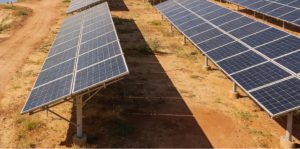
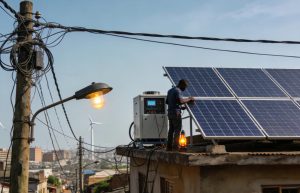
Perhaps the most exciting frontier for investors seeking high yields is the off-grid and decentralized energy sector. The national grid remains unreliable, but the market has moved on. Rather than waiting for centralized solutions, the commercial and industrial (C&I) sector has embraced decentralized solar and gas-fired captive power.
Return on investment for solar energy in Nigeria currently leads the continent. Thanks to tariff rationalization by the Nigerian Electricity Regulatory Commission (NERC), which allows for cost-reflective tariffs in the Band A feeder category, and improved forex liquidity, the payback period for C&I solar installations has dropped to between 3 and 5 years. For investors, the economics are compelling: businesses are willing to pay a premium for 24/7 power to avoid the 40-60% production losses associated with grid collapses.
The market size is staggering. With over 80 million people lacking access to the grid, the decentralized energy sector is not just an alternative; it is the primary growth vector. The Nigeria renewable energy boom is characterized by a shift from donor-funded pilot projects to purely commercial, privately financed mini-grids and embedded generation plants that offer the highest ROI in Africa due to high energy demand density and a deregulated pricing environment.
5. Policy Stability: The PIA and Deepwater Renaissance
The skepticism surrounding the Petroleum Industry Act (PIA) of 2021 has finally evaporated. By 2026, the administrative frameworks established by the NUPRC and the Nigerian Midstream and Downstream Petroleum Regulatory Authority (NMDPRA) are functioning with transparency and efficiency.
A key driver of investor confidence is the Host Communities Development Trust (HCDT) mechanism. By allocating 3% of operating expenditure to host communities, the PIA has fundamentally de-risked onshore and shallow-water operations. This has created a social license to operate that was previously absent, drastically reducing the incidence of militant disruptions that plagued the sector in the 2010s.
Consequently, Big Oil is back—but with a focus on deepwater. International Oil Companies (IOCs), having divested from mature onshore assets to indigenous players, are now deploying capital into deepwater exploration. The deepwater terrain offers better security and higher margin barrels. Recent discoveries in the Gulf of Guinea, facilitated by the PIA’s attractive fiscal terms (including investment tax credits), suggest that Nigeria’s oil and gas upstream Nigeria sector is poised for a new cycle of growth, focusing on high-volume, low-cost deepwater production.
6. Nigeria Energy Market PESTLE Analysis 2026
To validate why Nigeria stands out, a Nigeria energy market PESTLE analysis 2026 reveals the structural advantages driving current investment:
-
Political: The PIA has matured, providing fiscal stability. The HCDT framework has improved community relations, reducing operational disruptions.
-
Economic: Deregulation of the downstream sector has eliminated the fiscal drag of subsidies. Forex liquidity is improving due to reduced import bills (fuel) and increased non-oil exports (LNG, fertilizers).
-
Social: A youthful, urbanizing population creates immense demand for off-grid solar and reliable power, with high willingness-to-pay among SMEs.
-
Technological: Advancements in virtual pipeline technology (CNG) and modular refineries are bridging infrastructure gaps faster than traditional pipelines.
-
Legal: The NUPRC and NMDPRA operate with clear, enforceable mandates, ending the era of regulatory ambiguity that caused capital flight.
-
Environmental: The aggressive gas flare commercialization program is turning environmental liabilities into revenue streams, aligning with global ESG criteria.
7. Risk vs. Reward: Why Now Outweighs the Challenges
No analysis of the Nigerian market would be complete without acknowledging the risks. Security challenges in the North and pipeline vandalism remain concerns. Currency volatility, while reduced, still requires sophisticated hedging strategies.
However, the reward side of the equation has never been more compelling. The deregulated pricing environment means that margins are no longer capped by government intervention. The massive infrastructure upgrades—from the Dangote Refinery to the West African Gas Pipeline expansion—have created a robust industrial base.
For investors looking at the African energy market outlook, Nigeria offers a unique combination of scale and agility. It is the only market in Africa where an investor can engage in $1 billion deepwater projects, $50 million gas-to-power schemes, and $500,000 C&I solar installations within the same fiscal and legal framework.
The demand curve is insatiable. Energy poverty, often seen as a problem, represents the largest untapped market on the continent. Every megawatt of power generated and every molecule of gas distributed in Nigeria today finds a ready buyer willing to pay international prices because the alternative—downtime and inefficiency—is far more expensive.
As we stand in 2026, Nigeria has successfully transitioned from a high-risk, high-potential frontier to the most lucrative energy market in Africa. The foundation has been laid: the PIA has de-risked upstream investment, the Dangote Refinery has stabilized the downstream and macroeconomy, and the decentralized energy revolution is delivering superior returns in the power sector.
For energy executives and investors, the question is no longer “if” to invest in Nigeria, but “where” within the value chain to deploy capital first. With a supportive regulatory environment, a massive consumer base, and margins that outpace any other market on the continent, Nigeria represents the definitive energy investment destination of 2026.