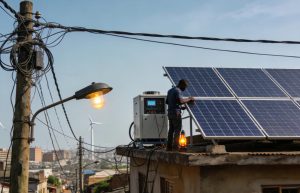
When international media report on Nigeria’s power sector, the headlines are almost always dominated by megawatts, mothballed power plants, and the elusive search for grid stability. Yet, for the 84 million Nigerians who lack reliable electricity access, the energy crisis is not an abstract debate about transmission infrastructure. It is a tangible, daily reality lived through two ubiquitous technologies: the silent arteries of power cables and wires running through neighborhoods, and the thrum of generator sets that have become the de facto national grid.
As the Nigeria International New Energy and Power Industry Expo 2026 prepares to convene industry leaders this September at the Landmark Centre in Lagos, it is worth shifting the lens. While futuristic conversations about solar mini-grids and battery storage are essential, the foundational elements—the cables, wires & generator sets—remain the unsung heroes and villains of Nigeria’s power narrative. They represent both the failure of centralized infrastructure and the astonishing resilience of Nigerian enterprise.
The Arteries of a Stressed System: Rethinking Power Cables
The condition of Nigeria’s power distribution network is often described with clinical terms like “technical losses” or “aging infrastructure.” But these phrases obscure a more chaotic reality. The power cables and wires crisscrossing Nigerian cities are not merely conduits for electricity; they are battlegrounds.
In urban centers like Lagos, the distribution network faces a triple threat. First, there is the sheer overload: as the population surges and economic activity intensifies, the existing high/low voltage electrical switches and cabling—much of it designed decades ago—are forced to carry loads far beyond their rated capacity. This leads to accelerated degradation and frequent faults. Second, there is the issue of material quality. The market has long been flooded with substandard cables that do not meet the specifications of the Nigerian Electricity Regulatory Commission (NERC), leading to premature failures and fire hazards. Third, and most pervasive, is the challenge of theft and vandalism. Non-energized cables, particularly in industrial areas, are frequently targeted for their copper content, creating a vicious cycle of repair and disruption.
However, the upcoming NNEPIE 2026 exhibition showcases a counter-narrative. The presence of international pavilions from over 20 countries signals a growing recognition that Nigeria’s cabling infrastructure requires not just patching, but a systematic upgrade. Advanced power control and testing systems on display will offer utilities new tools to monitor cable health in real-time, detecting hotspots and potential failures before they cause outages. The shift towards higher quality, internationally certified substation & transmission equipment is not just a technical upgrade; it is an economic necessity. For every naira invested in reducing transmission losses, several more are saved in diesel costs downstream.
The Generator Paradox: A $22 Billion Shadow Grid
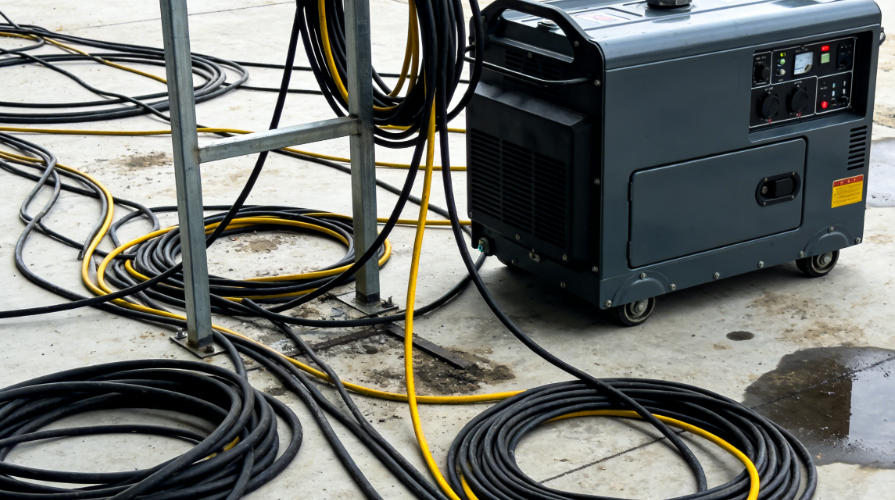
To understand the true scale of Nigeria’s energy deficit, one must ignore the official grid statistics and instead follow the sound of generators. With an estimated 22 million units in operation, Nigeria is arguably the world’s largest importer of small generator sets . This has created a parallel, decentralized, and extraordinarily expensive energy economy.
The dominance of generator sets is a direct consequence of policy failure and infrastructure gaps. For decades, businesses and households have had no choice but to internalize the cost of power generation. A small shop in Surulere might spend 30% of its daily revenue on petrol for a small generator. A manufacturer in Ogun State might operate three large diesel generators in rotation to ensure 24-hour production. This is not backup power; it is primary power.
Yet, the narrative is beginning to shift, driven by economic pressure and technological innovation. The astronomically high operating costs of diesel—exacerbated by subsidy removals—are forcing a hard re-evaluation. At the same time, the falling cost of solar PV and the emergence of hybrid inverters are creating a viable alternative. The “generator set” of the future, as will be evident at NNEPIE 2026, is increasingly a hybrid system. Leading brands like DEYE and OBST , featured exhibitors at the expo, are pioneering integrated solutions where a diesel generator serves not as the primary source, but as a backup to solar and battery storage. This “solar-diesel hybrid” model significantly reduces fuel consumption and maintenance costs while retaining the reliability that Nigerian businesses demand.
The Economics of Inefficiency: Why Quality Matters
One of the most persistent barriers to upgrading Nigeria’s power infrastructure has been the high upfront cost of quality equipment. In a market where price sensitivity is extreme, the temptation to purchase cheaper, lower-grade cables and wires or reconditioned generator sets is powerful. However, this is a classic case of “penny wise, pound foolish.”
A substandard cable might cost 30% less initially, but its higher resistance leads to greater energy losses (heat), a shorter lifespan, and a significantly higher risk of causing a fire. Similarly, a cheap, non-compliant generator set may have poor emissions control (contributing to local air pollution), lower fuel efficiency, and a tendency to break down at the worst possible moment. The total cost of ownership over five years is almost invariably higher for low-quality equipment.
This is where platforms like NNEPIE 2026 play a critical educational and commercial role. By bringing together international manufacturers who adhere to strict standards with local distributors and buyers, the expo facilitates a market shift towards value rather than just price. The live demonstrations of power plant equipment and systems and substation & transmission equipment allow engineers and procurement officers to verify performance claims before making purchasing decisions. The B2B matchmaking services offered by the expo are specifically designed to connect serious buyers with verified, high-quality suppliers, reducing the risk of procurement errors.
Policy Signals and Market Opportunities
The Nigerian government is increasingly aware that fixing the power sector requires addressing the entire ecosystem, from generation to the last-mile connection. Recent policy moves, including the constitutional amendment allowing states to generate and distribute their own power (the 2023 Electricity Act), are beginning to reshape the market landscape. This decentralization creates enormous opportunities for companies specializing in intelligent energy-saving devices, demand-side management technology, and, crucially, the distribution infrastructure that connects new power sources to consumers.
For manufacturers and distributors of cables, wires & generator sets, this represents a strategic inflection point. The old model—selling basic products into a stagnant grid—is fading. The new model requires selling integrated solutions for a dynamic, decentralized, and increasingly hybrid energy system. Cables must be smart, capable of interfacing with variable frequency speed drive systems and motor energy savers. Generator sets must be hybrid-ready, designed to integrate seamlessly with solar inverters and battery banks.
The Road to Lagos: Why NNEPIE 2026 Matters
As the countdown ticks towards September 16, 2026, the NNEPIE 2026 expo is poised to be more than just a trade show. It is a critical junction where global innovation meets local reality. The event’s co-location with the Nigeria Int’l Lighting Expo and the West Africa Power Summit ensures that conversations about hardware are integrated with discussions on policy and financing.
For the international community, the appeal is clear. With over 20 country pavilions and 100+ industry speakers, the expo offers an unparalleled gateway to the West African market. Nigeria’s status as China’s 2nd largest export market in Africa underscores the strength of existing trade ties, but the expo aims to broaden the base, attracting investment and technology from Europe, the Americas, and the Middle East.
For local Nigerian engineers, contractors, and business owners, the event is an opportunity to see, touch, and test the technologies that will define the next generation of the country’s power infrastructure. The live demonstrations of high/medium/low voltage converters and energy facility management systems translate complex engineering concepts into practical, applicable knowledge.
Conclusion: Building a Resilient Foundation
The journey to reliable power in Nigeria will not be completed in a single legislative term or by the completion of one large power plant. It will be built incrementally, component by component, connection by connection. The cables, wires & generator sets that form the backbone of today’s chaotic energy landscape are also the foundation upon which a smarter, more resilient grid will be built.
By prioritizing quality, embracing hybrid technologies, and fostering international partnerships through platforms like NNEPIE 2026, Nigeria can transform its energy paradox into a powerful engine for economic growth. The goal is not to eliminate generator sets overnight, but to relegate them to their proper role: efficient, clean, and reliable backup for a grid that finally works. And the first step towards that goal is ensuring that the very arteries of the system—the cables and wires—are fit for the 21st century.