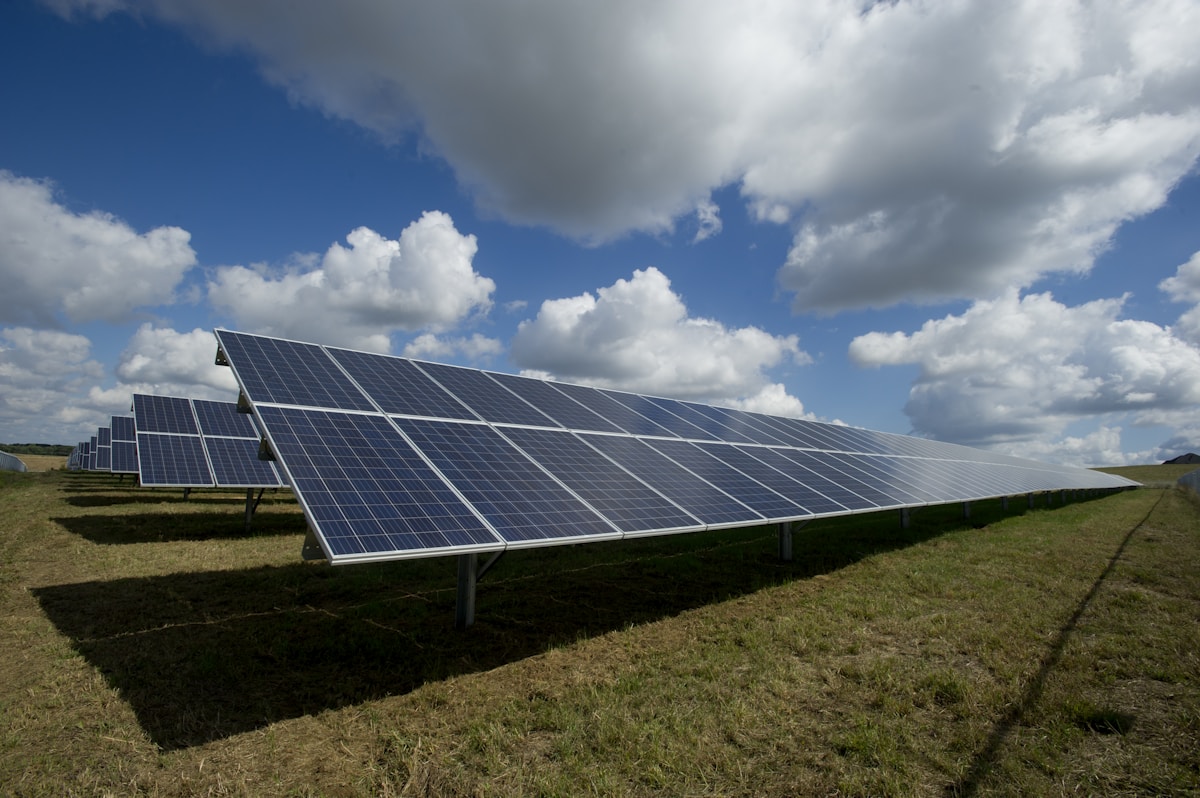
In April 2026, the Rural Electrification Agency disclosed a number that reshapes how international energy companies should think about Nigeria’s market. The country attracted approximately $425 million in investment during 2025 for the establishment of eight renewable energy manufacturing facilities, pushing local solar panel production capacity from 120 megawatts to roughly 300 megawatts, with an additional 3.7 gigawatts in the project pipeline. REA Managing Director Abba Aliyu confirmed that locally produced solar panels are already being exported from Lagos to Accra, Ghana—a development that positions Nigeria as a manufacturing hub serving the West African regional market.
That $425 million figure captures one dimension of the capital flowing into Nigeria’s energy sector. But it is not the only dimension. Across venture capital, development finance, and indigenous energy service company funding, a picture emerges of a market where multiple categories of investor are placing specific, informed bets on different segments of the energy value chain. Understanding who is writing the cheques—and what they are funding—provides a map of where the market is heading and which segments are attracting the smartest capital.
$100 Million for Nigerian Energy Service Companies: The NCDMB Equity Fund

At the Practical Nigerian Content Forum in Yenagoa, Engineer Felix Omatsola Ogbe, Executive Secretary of the Nigerian Content Development and Monitoring Board, unveiled a $100 million Equity Investment Scheme designed to provide equity and quasi-equity capital to high-growth indigenous energy service companies. Developed in partnership with the Bank of Industry, the fund addresses a structural financing gap: Nigerian energy service companies have historically been unable to access the long-term risk capital required to scale into globally competitive operations, relying instead on short-tenor debt that constrains their ability to bid for large projects, invest in equipment, or build technical capacity.
The fund introduces an uncommon financing structure in Nigeria’s energy sector: long-term risk capital that complements debt financing, with a single obligor limit of $5 million designed to catalyse multiple high-impact investments. BOI Managing Director Dr. Olasupo Olusi described the fund as a “milestone instrument for de-risking indigenous participation,” noting that BOI is committed to deploying equity capital where debt alone cannot unlock potential. The NCDMB and BOI signed a Memorandum of Understanding to operationalise the financing pipeline, with the first cohort of companies expected to access capital in 2026.
For international equipment manufacturers, technology providers, and EPC contractors, the NCDMB equity fund matters because it strengthens the balance sheets of the Nigerian companies that are most likely to be their local partners, consortium members, or customers. Well-capitalised Nigerian energy service companies can place larger equipment orders, execute larger projects, and offer stronger counterparty creditworthiness—all of which reduce the perceived risk of market entry for international firms.
AI Meets Energy: Why Breega and Catalyst Fund Backed a Nigerian Startup

In April 2026, Nigerian energy and climate-tech startup PowerLabs announced the close of its pre-seed funding round, led by Breega with participation from Catalyst Fund, Mercy Corps Ventures, and Kaleo Ventures. The investment will accelerate the rollout of Pai Enterprise, an AI-enabled energy orchestration platform designed for Nigeria’s commercial and industrial enterprises, with a planned expansion into key West African markets.
What drew this specific group of investors to PowerLabs is revealing. Nigeria’s manufacturing sector spent N1.11 trillion on alternative energy in 2024, a 42 percent increase from the previous year. That expenditure—largely on diesel and petrol generation—represents a cost that businesses are desperate to reduce. PowerLabs’ platform addresses the management layer between distributed energy assets and the businesses that depend on them, coordinating rooftop solar, battery storage, and grid connections in real time to optimise cost and reliability.
Breega Partner Tosin Faniro-Dada explained the investment thesis: “We backed PowerLabs at the pre-seed stage because we believe intelligent orchestration will be essential to solving Africa’s energy reliability challenge. The team is building the software and hardware layer that enables businesses to coordinate multiple distributed energy sources in real time.” Catalyst Fund Chief Investment Officer Olúwátóyìn Emmanuel-Olúbákè added: “Globally, more and more businesses operate in complex energy environments where multiple sources must work together. PowerLabs is starting in Africa to build the intelligence to orchestrate these systems seamlessly without sacrificing cost, reliability, or carbon footprint.”
For international energy equipment companies, the PowerLabs investment signals that Nigeria’s energy market is developing the software and services layer that makes distributed hardware deployments more valuable. Companies selling solar panels, inverters, and batteries into Nigeria are selling into a market where the intelligence layer—the software that optimises when to charge from solar, when to draw from batteries, and when to fall back to the grid or generator—is attracting venture capital because it multiplies the value of the hardware.
Arnergy’s $18 Million Series B: The C&I Solar Thesis Validated
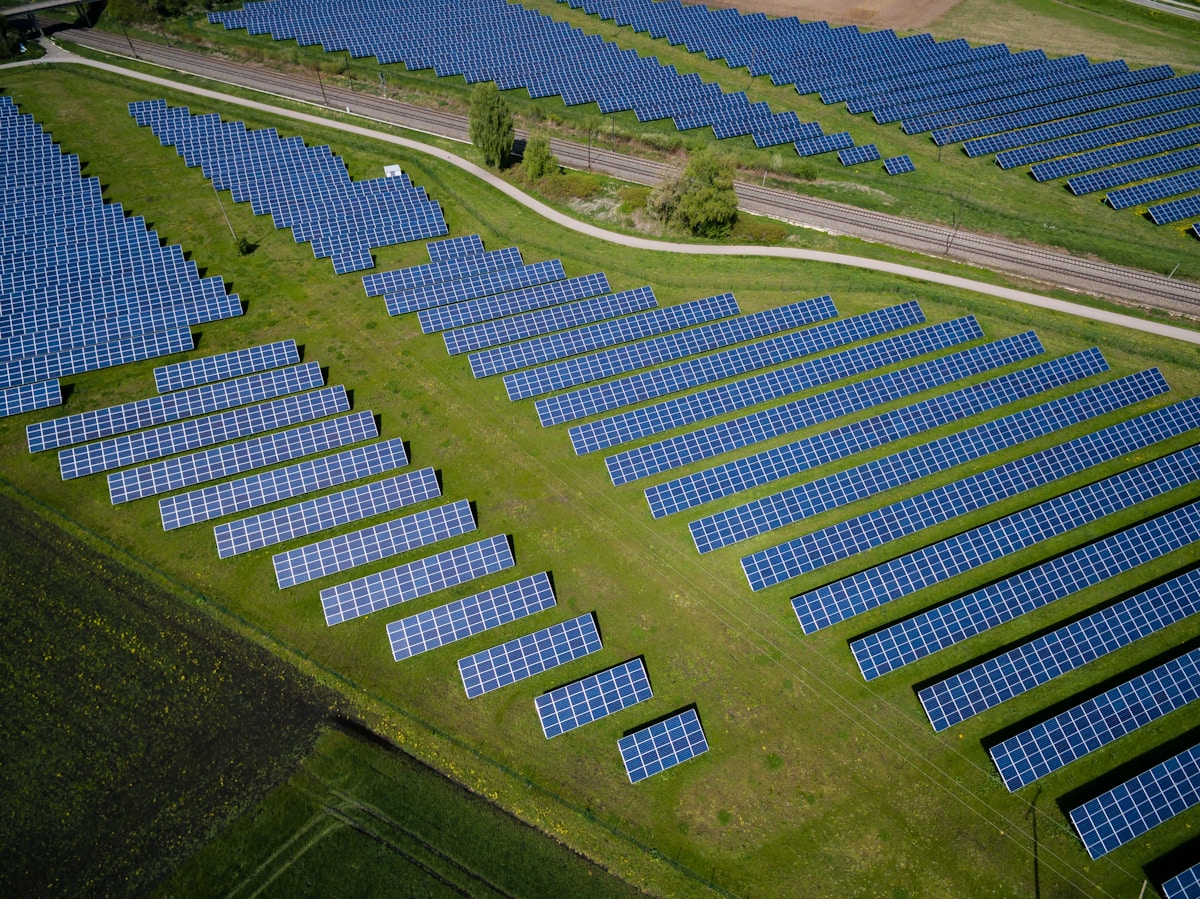
Lagos-based Arnergy, which provides distributed solar-plus-storage systems for homes and businesses, closed an $18 million Series B round in April 2025, an extension of a previous $15 million raise. The round was led locally by CardinalStone, signalling that Nigerian institutional investors are increasingly comfortable with the risk-return profile of distributed energy assets. Arnergy’s model—deploying solar-plus-storage systems behind the meter at commercial and industrial customer sites—is the same model that has driven Nigeria’s C&I solar segment to an estimated 6–7 MW or more of new capacity additions in 2024 and 2025.
The Arnergy raise matters because it demonstrates that the C&I solar thesis has been validated not just by development finance institutions, but by commercial investors deploying capital with return expectations. When local institutional investors commit to distributed energy, it signals that the sector is maturing beyond the grant-and-concession phase into a phase where commercial capital can price the risk and still see acceptable returns.
The DRE Nigeria Fund and the $2 Billion Climate Fund: Public Capital Crowding In Private Investment
On the public capital side, the Nigeria Sovereign Investment Authority launched a $500 million Distributed Renewable Energy Fund in March 2025, designed to stimulate local financing for renewable energy projects that commercial banks have been reluctant to fund independently. The fund operates alongside the $2 billion National Climate Change Fund, capitalised to finance projects aligned with Nigeria’s Energy Transition Plan. Nigeria’s green bond programme has demonstrated strong market appetite: a N50 billion sovereign green bond issued in 2025 attracted N91 billion in subscriptions, while Lagos State’s green bond was oversubscribed by nearly 98 percent.
The combination of sovereign funds, green bonds, and development finance creates a layered capital structure for energy projects in Nigeria. Concessional capital from the DRE Fund or the Climate Change Fund can absorb first-loss risk, improving the credit profile for commercial lenders and equity investors. This structure is particularly important for mini-grid and C&I solar projects where the underlying economics are strong but the perceived country risk has historically priced commercial capital out of the market. As the NCDMB equity fund, the DRE Fund, and the green bond programme mature, the capital available to Nigerian energy projects is diversifying from a narrow base of development finance institutions to a broader pool that includes local institutional investors, sovereign wealth capital, and venture investors.
Where NNEPIE 2026 Brings Capital and Projects Together

The Nigeria International New Energy & Power Industry Expo (NNEPIE) 2026, scheduled for September 16–18 at the Landmark Centre in Lagos, will feature the West Africa Energy Summit’s dedicated investment track. Sessions will cover the NCDMB $100 million Equity Investment Scheme application process, the DRE Nigeria Fund’s investment criteria and pipeline, and venture capital perspectives on Nigeria’s energy technology sector. The summit will also include briefings from the National Council on Climate Change on the $2 billion Climate Fund’s project selection criteria and from the Debt Management Office on the N516 billion green bond issuance pipeline for 2026.
For international companies seeking to understand where Nigerian energy capital is flowing—and how to position their products, services, or projects to access it—NNEPIE 2026 provides direct engagement with the fund managers, venture capitalists, and development finance institutions that are allocating capital across Nigeria’s energy value chain.
Register for the West Africa Energy Summit investment track and access the full speaker line-up at https://www.nnepie.com.
NNEPIE 2026: Powering West Africa’s Sustainable Energy Future.