When the lights went out for the third time in a week at his Lagos textile factory, Emeka Okafor did not wait for the utility company to restore power. He called a solar installer instead. “Diesel was eating us alive. The grid gives us maybe five hours a day if we’re lucky,” Okafor told BusinessDay in March 2026. His factory now runs almost entirely on a rooftop solar array paired with battery storage. “We haven’t looked back.”
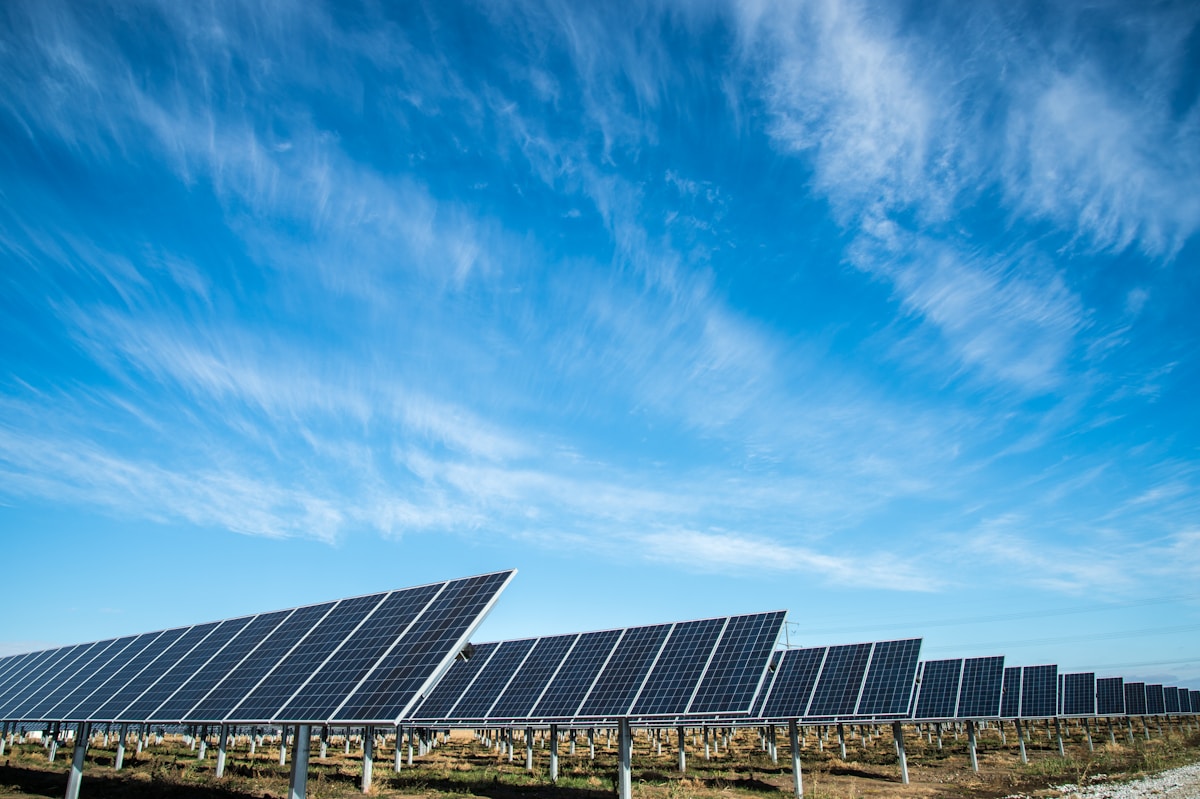
Okafor’s story is no longer an outlier. Across Lagos, Kano, Aba, and a hundred smaller towns, the same calculation is being made by factory owners, shopkeepers, hospital administrators, and households: the grid cannot be relied upon, diesel has become unaffordable, and solar—finally—makes commercial sense. The result is a market that has quietly become one of Africa’s most consequential energy stories. Nigeria installed 803 megawatts of new solar capacity in 2025, a year-on-year surge of 141 percent. Off-grid installations—private mini-grids, solar home systems, and commercial rooftop arrays—now account for roughly 1.15 gigawatts, or about 96 percent of Nigeria’s total installed solar capacity. The Nigeria renewable energy and solar off-grid market is now valued at approximately $2.5 billion.
That $2.5 billion figure tells you the market exists. What it does not tell you is how the market works—who is deploying capital, where the policy ground is shifting, and what separates a durable investment thesis from a headline. This is the story of Nigeria’s off-grid solar sector in mid-2026: not the press releases, but the machinery underneath.
First, Understand the Grid That Created This Market
It is impossible to understand Nigeria’s off-grid solar boom without understanding the grid that produced it. Nigeria’s installed generation capacity sits north of 12,000 megawatts. Actual output struggles to reach 5,000 MW. The grid transmits roughly 4,000 MW and distributes about 3,000 MW to a population exceeding 220 million. Over the past decade, the grid has suffered nearly 140 recorded system collapses, with some areas receiving reliable electricity for only five to six hours per day. In the first two months of 2026 alone, the national grid collapsed twice.
The numbers get worse the deeper you dig. About 85 million Nigerians lack access to grid electricity, and millions more connected to the grid face frequent, unpredictable outages. Nigeria generates between 4,000 and 5,000 megawatts against an estimated demand of 20,000 to 30,000 megawatts—a gap that translates to roughly 4 to 5 watts per capita, compared to over 1,000 watts in developed economies. The World Bank estimates that power shortages cost Nigeria approximately $26 billion annually in lost productivity and increased operating costs, with Nigerians spending roughly $14 billion yearly on fuel for self-generation.
This is the vacuum that off-grid solar is filling. Not because of climate policy. Not because of development finance. Because the alternative—diesel generators, candles, darkness—is worse, and the economics have tipped.
The Numbers That Broke Diesel’s Grip
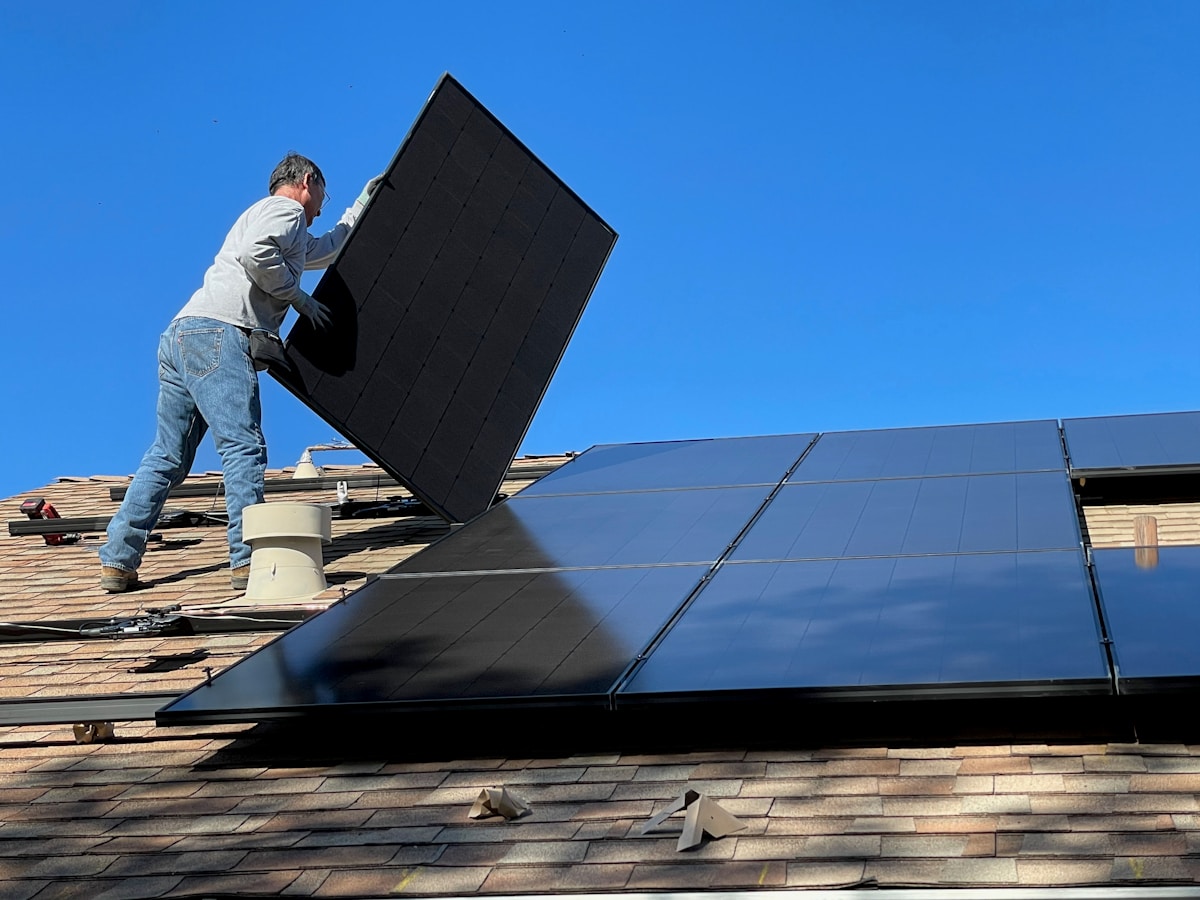
For years, the economic case for solar in Nigeria was directional but not decisive. That changed in 2024 and 2025. Diesel costs now run above $0.30 per kilowatt-hour, while manufacturers in Lagos, Kano, and Port Harcourt are locking in 20-year solar power purchase agreements at fixed tariffs well below that threshold. Commercial and industrial (C&I) users who adopt on-site renewables are achieving savings of 20 to 30 percent compared to diesel self-generation.
Nigeria’s solar resource compounds the advantage. The country receives 4.5 to 6.5 kilowatt-hours per square meter per day, producing capacity factors 40 to 60 percent higher than many European sites. Global module price declines have further compressed costs, bringing grid-parity economics to the sun-rich northern states. Pay-as-you-go financing models are extending solar access to smaller firms and households, with payback periods now as short as three to five years.
This is not marginal improvement. It is a structural shift in the cost of doing business in Nigeria, and it explains why the C&I solar segment is now the fastest-growing slice of the market.
DARES: The Programme That Is Actually Delivering
If the grid’s failure created the opportunity, and the economics made the case, then the Distributed Access through Renewable Energy Scale-Up (DARES) programme has provided the scaffolding for scaled deployment. DARES is a $750 million World Bank-supported initiative implemented by the Rural Electrification Agency (REA), designed to expand electricity access through privately delivered renewable energy systems. It targets electricity access for 17.5 million Nigerians by connecting over 2.5 million households and deploying 1,350 mini-grids, including 250 interconnected systems. The programme is expected to attract an additional $1.1 billion in private investment through a results-based financing model that requires developers to commit capital upfront.
In April 2026, on the sidelines of the World Bank Group and IMF Spring Meetings in Washington, D.C., a group of Nigerian off-grid developers secured $83 million in IFC-backed financing under DARES. The financing is structured as a revolving debt facility, blending concessional funding with commercial capital to provide longer-tenor funding to developers in a market where affordable financing has been the binding constraint. Darway Coast, PriVida Power, Prado Power, GVE Projects, and StarTimes Smart Energy signed agreements under the first phase, while Ashipa Energy, Eauxwell Nigeria, Ignite Power, Maskh Nigeria, Nayo Tropical Resources, and Paras Energy have been onboarded into the next phase of the pipeline.
IFC Managing Director Makhtar Diop described the transaction as a demonstration of “how blended finance can address ecosystem constraints at scale,” adding that the IFC is “already looking to replicate this success across the continent”. Olufemi Akinyelure, Head of the Nigeria Electrification Programme and DARES Project Lead, captured the significance bluntly: “Distributed renewable energy in Nigeria is now a bankable market, not a pilot segment.”
The DARES programme has already reached more than 4.1 million Nigerians and targets over 17.5 million beneficiaries by 2028, with approximately 465 megawatts of distributed renewable energy capacity to be deployed. In March 2026 alone, the REA disbursed N3.2 billion to Zanoplus for solar mini-grid projects in Bauchi State, following an earlier N7.4 billion release to Ventura Logistics Services for a 7MW mini-grid initiative. These disbursements sit within a N100 billion revolving credit facility established through a Memorandum of Understanding between the REA and Lotus Bank, under which developers can access up to ₦8 billion in equipment procurement financing with tenures of 18 months.
In the 2026 federal budget, the REA received N502.21 billion—nearly half of the N1.096 trillion capital allocation to the power sector—to accelerate deployment of solar mini-grids and develop “smart communities” in underserved rural areas. This is one of the largest single-year commitments to off-grid electrification in Nigeria’s history.
The Policy Reset: Why Mini-Grid Developers Are Suddenly Optimistic
In April 2026, the Nigerian Electricity Regulatory Commission (NERC) released updated mini-grid regulations that industry participants describe as the most consequential policy reform for the off-grid sector in years. The new regulations—issued as NERC–R–001–2026—represent the culmination of two years of advocacy and technical submissions from the REA.
The headline changes are straightforward but powerful. Capacity thresholds have been raised from the previous 1MW limit to 5MW for isolated mini-grids and 10MW for interconnected mini-grids. This allows developers to build larger, more robust systems without being trapped in the complex regulatory requirements typically reserved for utility-scale power plants. The regulation also introduces a single permit that consolidates generation, distribution, and supply, eliminating the costly and time-consuming dual-licensing processes that previously stalled progress. Additionally, it establishes practical environmental compliance pathways specifically designed for solar PV and battery systems, alongside defined energisation timelines that ensure once a project is built, it is commissioned and delivering power without unnecessary delay.
REA Managing Director Abba Aliyu described the reform as a shift “from scarcity thinking to a strategy of scale and innovation.” He emphasised that for developers working under major initiatives like DARES, the Nigeria Electrification Project, and the Energising Education Programme, “the impact of this reform is immediate. The work now shifts from navigating bureaucratic hurdles to accelerating the deployment of infrastructure”.
The regulatory reset matters because it addresses a problem that has frustrated developers for years: projects that were too large for the old mini-grid framework but too small to justify the cost and complexity of utility-scale licensing. By raising the ceiling and simplifying the permitting process, NERC has effectively created a new category of mid-scale projects that can serve entire communities or industrial clusters without the regulatory overhead of a full utility license.
The Private Capital That Is Quietly Flowing
Beyond the development finance headlines, private capital is finding its way into Nigeria’s off-grid solar sector through multiple channels.
In March 2026, Starsight Energy Africa Group secured $15 million in mezzanine debt funding from British International Investment (BII), the UK’s development finance institution. The investment is being deployed primarily in Nigeria to support the company’s commercial and industrial solar pipeline. Starsight’s model—deploying solar-plus-storage behind the meter at C&I customer sites—addresses the segment of the market with the strongest unit economics. Up to 40 gigawatts of electricity in Nigeria is estimated to be generated from diesel and petrol generators, and companies like Starsight are systematically converting that diesel demand into solar offtake.
At the smaller end of the market, Lumos Nigeria has signed a debt financing agreement with All-On, a Nigerian off-grid energy investment company, to provide affordable solar electricity to families and businesses in the Niger Delta through its pay-as-you-go solar home system.
InfraCredit has also entered the space, backing CEESOLAR through a special purpose vehicle to develop and operate four solar mini-grids in Cross River State with a total capacity of 701kWp and up to 3,257 connections. The InfraCredit involvement is notable because it represents a local institutional credit enhancement mechanism being applied to distributed energy assets—a structure that, if it scales, could significantly reduce the cost of capital for mini-grid developers across the country.
The REA also secured a $700,000 grant from the ECOWAS Commission in February 2026 under the Regional Off-Grid Electricity Access Project (ROGEAP), a World Bank-supported initiative to expand off-grid electricity access across West Africa and the Sahel. The grant will fund solar PV installations at 15 public health and education facilities in the FCT, Niger State, and Nasarawa State.
Additionally, a new $20 million Renewable Energy Blended Finance (REBF) fund has been established to target Nigeria’s off-grid sector, with its formal portal for proposals expected to open in July 2026. REBF targets established developers with signed power purchase agreements, and the first set of solar-powered productive use appliances funded by the facility is expected to hit the market in the first quarter of 2027.
Foreign Exchange and the Affordability Conundrum

For all the momentum, Nigeria’s off-grid solar sector operates on a knife edge. The industry is heavily dependent on imported components—solar panels, lithium batteries, inverters, and balance-of-system equipment are largely sourced from international manufacturers. This makes the entire ecosystem highly sensitive to naira fluctuations. As the currency weakens, the cost of solar systems rises almost immediately. What is particularly destabilising is the speed and unpredictability of these changes: a system quoted one month can become significantly more expensive the next.
Installation costs have risen by as much as 208 percent on foreign exchange woes and high demand, according to market intelligence gathered in early 2026. For businesses, this creates hesitation. Projects are delayed, scaled down, or abandoned because the financial assumptions behind them shift too quickly. For developers, it introduces risk in inventory management and pricing strategies.
Yet there is a countervailing force. While overall system costs have been volatile, battery costs are declining globally as advances in lithium battery technology and manufacturing scale gradually drive prices down. In Nigeria, this shift is beginning to change how solar systems are designed and deployed, particularly for businesses that require backup power. As storage becomes more accessible, it reduces reliance on diesel generators, improves system autonomy, and strengthens the financial case for solar over the long term. A Lagos-based developer described the trend succinctly: “The economics used to work only if you ignored the battery. Now the battery is what makes the economics work”.
The risk landscape for off-grid solar in Nigeria is well-mapped at this point: demand uncertainty in newly electrified communities, currency fluctuation affecting imported equipment, regulatory changes, payment default risk, and long payback periods. Mitigating these risks—through partial risk guarantees, concessional debt, currency hedging mechanisms, results-based incentives, and portfolio aggregation—is essential to attracting the commercial financing required for scaled deployment.
Building Things Here: The Industrialisation Imperative
Nigeria’s off-grid solar boom has a structural flaw that policymakers, developers, and investors are now confronting directly: the country imports virtually all of the equipment that powers its solar revolution. Nigeria imported over 2.9 million solar panels in 2025 alone, spending more than ₦400 billion on imports. The raw material for producing solar panels—silica—is present across nearly 25 Nigerian states, some in its purest form at nearly 95 percent purity. Yet not a single industrial-scale polysilicon production facility exists in the country.
The response to this paradox is starting to take shape. The REA has disclosed that Nigeria secured approximately $425 million in 2025 to establish eight renewable energy manufacturing plants, pushing local solar panel production capacity from 120 megawatts to roughly 300 megawatts, with an additional 3.7 gigawatts in the pipeline. Locally produced panels are already being exported from Lagos to Accra, Ghana.
In April 2026, the REA and Mente Energy Limited launched the Renewable Energy Localisation and Industrialisation Programme, a framework designed to convert rising demand for solar solutions into a structured industrial base anchored on local value creation. For over a decade, solar adoption has expanded rapidly, but most equipment has been imported, limiting the sector’s contribution to domestic industrial growth. The partnership is designed to reverse that trend by linking demand directly to local manufacturing capacity. At the centre of the programme is a 20-year national demand model that provides credible data on future needs for solar components, intended to reduce investor uncertainty and create a bankable pipeline for financing manufacturing and supply chains.
Separately, the National Agency for Science and Engineering Infrastructure (NASENI) is developing a 40-hectare Renewable Energy Industrial Park in Gora, Nasarawa State. The park is designed as a multi-energy industrial hub supporting domestic production of solar panels, mounting structures, wind systems, and biomass technologies. It is expected to create approximately 50,000 jobs across the renewable energy value chain.
But the industrialisation imperative exists in tension with the access imperative, and that tension is now spilling into trade policy. The Federal Government has signalled interest in restricting solar panel imports to promote local manufacturing. Stakeholders have pushed back forcefully. Surveys indicate that between 85 and 89 percent of Nigerians oppose an outright import ban, warning that restricting imports before building local capacity would cause supply shortages and price shocks. The emerging consensus favours a phased approach: a 5–10 year graduated reduction in imports, combined with incentives for local manufacturers, duty waivers on raw materials and components, and expanded support for mini-grid deployment.
The policy conversation around solar imports exemplifies a broader challenge: the tension between affordable energy access today and domestic industrial capacity tomorrow. Resolving that tension is one of the defining strategic questions for the sector in the years ahead.
What to Watch for the Rest of 2026
For international investors, equipment manufacturers, and energy companies tracking Nigeria’s off-grid solar market, several specific developments will separate signal from noise in the second half of 2026:
- DARES deployment velocity. The $83 million IFC-backed facility has identified its first and second cohorts of developers. How quickly those developers move from financing agreements to operational mini-grids—and whether community-level offtake meets projections—will be a critical test of the “bankable market” thesis.
- The NERC mini-grid regulations in practice. The new 5MW and 10MW thresholds, the single-permit system, and the streamlined environmental pathways have been welcomed by industry. What matters now is whether NERC processes permits at the speed developers require. A backlog of applications waiting months for approval would undermine the regulatory reform’s intent.
- Currency trajectory and developer resilience. The naira’s volatility is the single largest operating risk for developers dependent on imported equipment. Companies that have built local inventory buffers, negotiated naira-denominated offtake contracts, or secured foreign currency hedging arrangements will outperform those that have not. The divergence will become increasingly visible.
- The solar import policy debate. A phased approach to import reduction appears to be the emerging consensus. The specifics—phase-in timelines, tariff structures, duty waivers for components, and support mechanisms for local manufacturers—remain unresolved and will directly affect equipment pricing and market access for international suppliers.
- REA budget execution. A N502.21 billion allocation is a statement of intent. The conversion rate from budget allocation to deployed projects will be the measure of whether Nigeria’s off-grid electrification push is accelerating or merely maintaining pace.
- State-level electricity market activation. With more than 15 states now at various stages of establishing their own electricity markets under the 2023 Electricity Act, the regulatory landscape for off-grid solar is becoming more fragmented. States that move quickly to create clear, developer-friendly frameworks will attract investment. Those that do not will be bypassed.
- The waste management challenge. Nigeria’s solar capacity reached approximately 385–400 MWp by the end of 2024, and the explosive growth in adoption guarantees an equally explosive wave of electronic waste in the decades ahead. Solar panel e-waste in Nigeria is projected to surge from 3.3 million kilograms in 2021 to 60.3 million kilograms by 2040. Without serious planning for end-of-life management—battery recycling, panel decommissioning, circular economy infrastructure—the sector risks storing up an environmental liability that could undermine its long-term social license.
The Bottom Line
Nigeria’s off-grid solar market in mid-2026 is not a development story dressed up as an investment opportunity. It is a market being built by grid failure, diesel fatigue, declining technology costs, and a regulatory framework that is—finally—beginning to align with commercial reality. The $2.5 billion market valuation, the 803 megawatts of new capacity added in 2025, the $83 million IFC facility, and the N502 billion REA budget allocation are all data points in the same direction: off-grid solar has moved from the margins to the centre of Nigeria’s energy conversation.
But moving to the centre is not the same as succeeding at the centre. The sector still operates in a high-risk environment defined by currency volatility, import dependency, policy uncertainty, and the perennial gap between budget announcements and actual deployment. The companies and investors that build durable positions in this market will be those that understand the risks as clearly as they understand the opportunity—and that price both correctly.
For the 85 million Nigerians still without grid electricity, the question is not academic. It is whether the solar panel on the roof and the battery on the wall can deliver what the national grid has not: reliable power, affordably priced, at a scale that matches the need. The evidence from the first half of 2026 suggests that the answer is moving closer to yes. The second half will determine how fast.